
Car AC Repair vs. Replacement: When Does Your System Need an Overhaul?
There is nothing quite like turning on your car’s AC on a blazing hot day, only to have it blow straight ambient air right in your face. When vehicle air conditioning stops working, drivers usually brace themselves for a massive repair bill. But most of the time, an AC system stops working for relatively simple reasons.
At Toki Auto Works, we see it all. Here is a breakdown of why car AC systems fail, how we troubleshoot them, and the critical line between a simple fix and a full system replacement
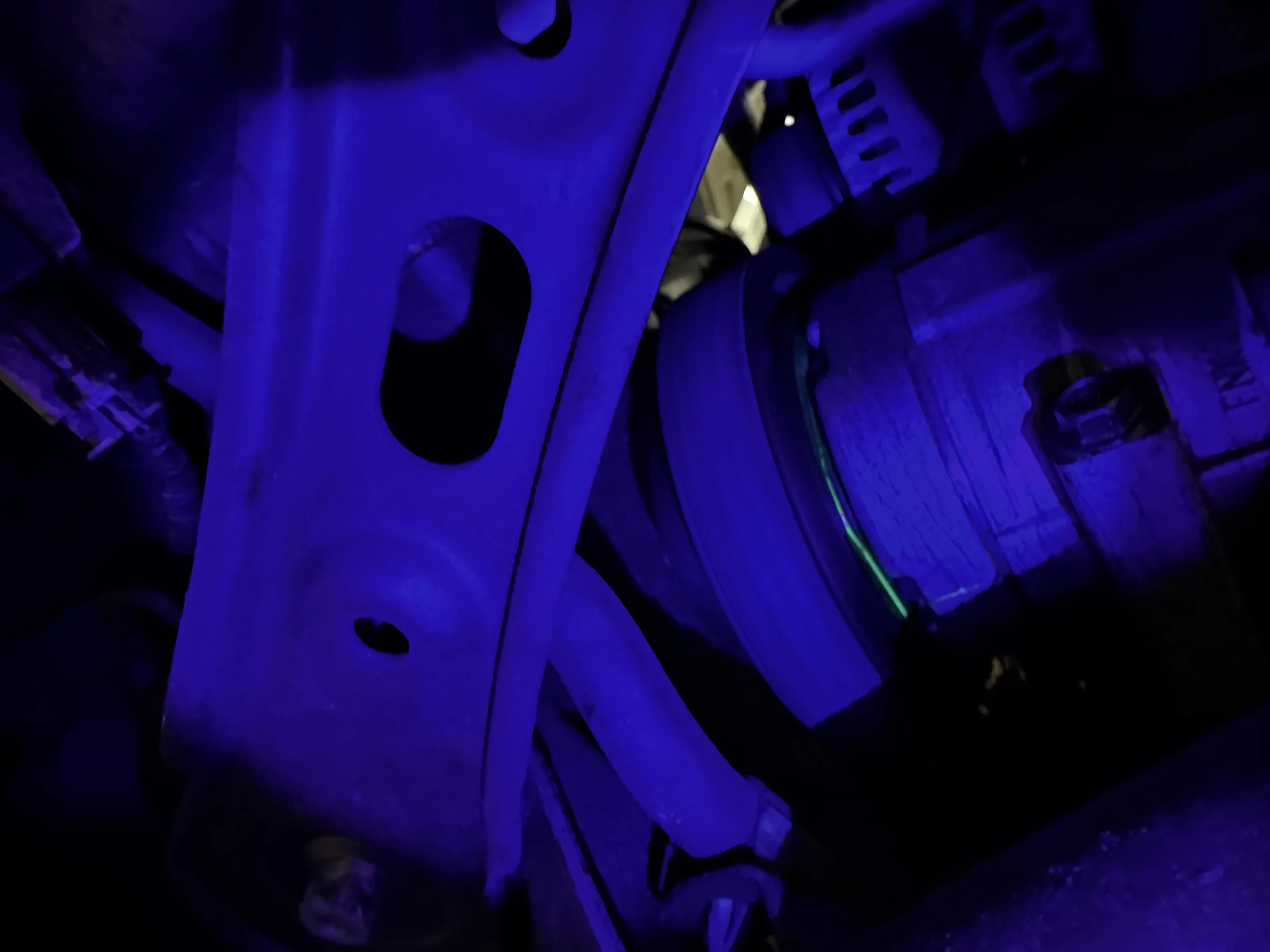
Image of leaking compressor
Simple Fixes: Electrical Issues and Low Refrigerant
Most of the time, the culprit behind a dead AC is something minor:
Electrical Failures: An issue with a failed electrical component, like damaged or ripped wires, a burnt fuse, or a burnt relay, can prevent the compressor from turning on. If the compressor doesn't kick on, it won't pump the refrigerant.
Low Refrigerant & Recharges: Another common failure is simply having low refrigerant in the system. This is usually an easy fix because we can just recharge the system. However, we still need to find the leak.
Cooling Fans & Engine Temp: If the main cooling fan isn't working, your AC won't work either. Additionally, if the engine is overheating, modern cars will automatically disable the AC system to protect the engine.
The Detective Work: Tracking Down AC Leaks
Finding a refrigerant leak can be difficult and take a while. Bad seals and valves, cracks in the front condenser, or leaking evaporators hidden under the dashboard can all cause refrigerant to leak out.
To track these down, we rely on a few diagnostic steps:
Vacuum Testing: We use a vacuum machine to check for leaks in the sealed system.
UV Dye and Light: We add UV dye to the system oil and use a UV light to check where it escapes.
Large vs. Small Leaks: Large leaks are much easier to find because we can spot them using air pressure. Small leaks, however, are a different story because they force us to rely on UV dye, can take a while to locate, and might only leak out slowly over days or weeks.

Image of AC machine next to Lamborghini
When a Simple Fix Turns Into a Full System Replacement
The worst-case scenario happens when a vehicle runs completely out of oil and refrigerant. When the system is starved of lubrication, it can lead to catastrophic compressor failure.
When a compressor mechanically fails internally, it can send metal shards circulating throughout the entire AC system. Once metal debris contaminates the lines, condenser, and evaporator, you can be forced to replace the entire AC system.
Replacing an entire system is a lot more expensive than a simple recharge after changing out a bad seal. Catching a leak early, before it drains the system dry and destroys the compressor—is the best way to save your AC and your wallet.
Got AC Issues? Let Us Take a Look
If your car’s air conditioning is losing its cool or blowing warm air, don't wait until it becomes a total system failure. Bring it by Toki Auto Works in Sacramento, and we'll track down the root cause. Whether it's a simple relay, a tricky slow leak, or a failing component, and get you blowing cold again.